Medium-Density Fiberboard (MDF) is a highly versatile engineered wood product widely used in construction, furniture making, and interior design. One of its key advantages lies in its available dimensions and thicknesses, which allow for exceptional plasticity—meaning it can be easily shaped, cut, and molded to fit a variety of applications. In this article, we’ll delve into the standard sizes and thicknesses of MDF, explore how these contribute to its malleability, and highlight practical uses that make it a go-to material for professionals and DIY enthusiasts alike.
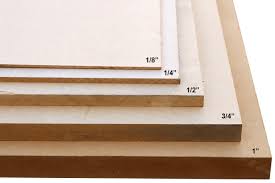
Various thicknesses of MDF sheets, ranging from 1/8
Standard Dimensions of MDF Sheets
MDF is typically produced in large sheets for efficient handling and cutting. The most common size is 4 feet by 8 feet (1220mm x 2440mm), which aligns with standard plywood dimensions for easy integration into projects. This size is ideal for covering large surfaces, such as cabinetry or wall paneling, without excessive waste. However, manufacturers also offer variations like 5 feet by 8 feet or even larger panels up to 5 feet by 12 feet for specialized needs. For custom projects, MDF can be cut to size, with options available in thicknesses starting from as thin as 1/8 inch (3mm) up to 1-1/2 inches (38mm).
These dimensions provide flexibility in design. For instance, a 4×8 sheet can be divided into multiple pieces for shelves, doors, or decorative elements, reducing material costs and simplifying assembly.
Exploring MDF Thickness Options
Thickness is a critical factor in MDF’s application, directly influencing its strength, weight, and workability. MDF thicknesses are categorized into thin, medium, and thick options:
- Thin MDF (2mm – 7.5mm): Often used for lightweight applications like drawer bottoms, toy boxes, or backing panels. At around 3mm, it’s highly flexible and easy to bend for curved designs.
- Medium MDF (8mm – 16.5mm): Suitable for furniture components such as cabinet backs (9mm) or general-purpose shelves (12mm-15mm). This range balances durability with ease of handling.
- Thick MDF (17mm – 30mm): Ideal for structural elements like doors, tabletops, or heavy-duty furniture. 18mm is a popular choice for full cabinetry due to its robustness.
Thicker boards weigh more—approximately 3 lbs per square foot for 3/4-inch MDF—making them sturdier but requiring stronger supports.
MDF board stack illustrating common sizes and thicknesses for furniture applications.
The Plasticity of MDF: Why It’s So Moldable
MDF’s true strength is its plasticity, stemming from its uniform composition of wood fibers bonded with resin under high pressure. Unlike solid wood, which has grain patterns that can cause splitting, MDF has no grain, allowing for smooth cuts, routing, and shaping without splintering. This makes it perfect for intricate designs, such as decorative moldings, curved furniture edges, or CNC-machined patterns.
For example, in routed applications, MDF’s homogeneous structure ensures clean edges and a smooth finish, even with thicknesses up to 1.25 inches. Its ability to hold screws and paints well further enhances its versatility, enabling creators to achieve professional results with minimal tools.
In summary, MDF’s dimensions and thicknesses offer unmatched plasticity, making it an essential material for modern woodworking. Whether you’re building custom furniture or architectural elements, selecting the right size ensures optimal performance and aesthetics.